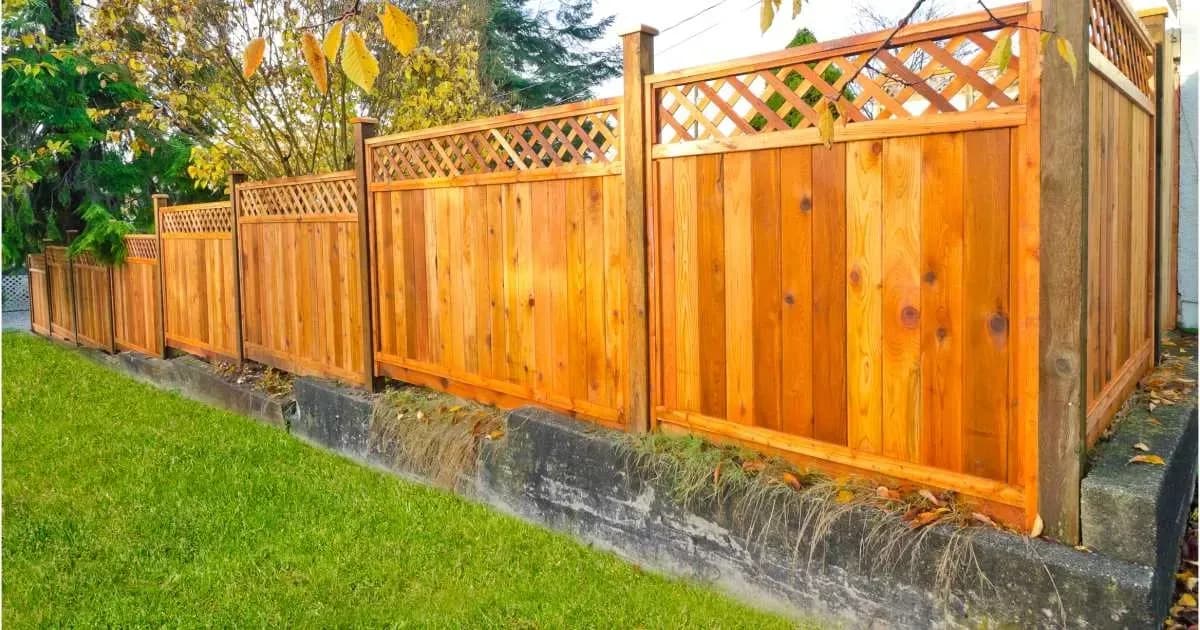
Wood Fence Installation in Lawrence, KS
Lawrence Fence Company builds cedar and pressure-treated wood fences across Lawrence and Douglas County, from six-foot privacy runs to front-yard picket. We have been setting posts in Kansas clay since 2005, and every estimate is free and done on site.
Cedar and treated pine, set to hold in Kansas clay.
Wood Fence Installation
Wood is the fence most people in Lawrence picture when they picture a fence: cedar boards, a stained finish, a gate that latches square. We build them across Douglas County for homeowners who want real lumber and the freedom to finish it in whatever color the rest of the house already is. Wood also lets you mix styles on one property, with a solid privacy run along the back line and something shorter and more open out front. And because wood comes apart board by board, one cracked picket never means a whole new run.
What decides whether a wood fence still looks straight in ten years is almost never the boards. It is the posts. Douglas County soil is heavy clay that swells when it is wet and pulls back when it dries, and a Kansas winter freezes and thaws the top few inches of ground over and over. A post set shallow, or set in dirt instead of concrete, will lift and lean. We dig below the frost line, set posts in concrete with roughly a third of each post in the ground, and crown the footing so water sheds away from the wood instead of standing against it.
Cedar and pressure-treated pine both work here, and they age differently. Cedar carries natural oils that resist rot and insects, holds a semi-transparent stain well, and weathers to a soft gray if you let it. Pressure-treated pine costs less, takes solid stain or paint well, and needs to dry out before that first coat goes on. Either way, plan on stain or sealer every two to three years. Lawrence humidity in July and hard cold in January are what split an unfinished fence, so walk the line each spring and look for cracks and splinters.
Before anything gets dug, we check what Lawrence and Douglas County ask for on your lot. Permit requirements change with fence height and where the fence sits on the property, and an HOA can add rules about height, material, and which side the finished face goes. We sort that out before the dig, call in utility locates, and install across Lawrence, Eudora, Baldwin City, Lecompton, Perry and out toward Topeka.
How it works
- 1
Free Estimate
We assess the job, talk through your goals, and give you a clear, no-obligation written estimate.
- 2
Schedule
We lock in a date that works for you and prep everything needed to do the job right.
- 3
We Do the Work
Our experienced, fully-equipped crew completes the work safely, cleanly, and on schedule.
- 4
Final Walkthrough
We review the finished work with you and clean up so you’re completely satisfied.
What’s included
- Cedar privacy fence (dog-ear or flat-top)
- Board-on-board
- Shadowbox (good-neighbor)
- Pressure-treated pine privacy fence
- Wood picket
- Lattice-top privacy fence
- Horizontal cedar
Wood Fence Installation questions, answered
- Cedar or pressure-treated pine for a fence in Lawrence?
- Cedar has natural oils that resist rot and insects, takes a semi-transparent stain well, and silvers to a soft gray if you never finish it. Pressure-treated pine costs less, is strong, and holds solid stain or paint well once it has dried out. A common approach is to split the difference: treated lumber for the posts in the ground, cedar for the rails and boards you actually look at. We will walk the yard with you and say which way fits your exposure and your budget.
- How often does a wood fence need staining or sealing here?
- Plan on stain or sealer every two to three years, plus a look down the line each spring for cracked or splintered boards. Lawrence summers are humid and the winters get cold, and that swing is what grays and dries out an unfinished fence. The run that catches full west afternoon sun usually asks for attention before the shaded side does.
- Will the posts heave in the winter?
- They can, if they are set wrong. Douglas County clay holds water, and water freezing in the top of the ground lifts anything shallow with it. We set below the frost line, in concrete, with about a third of the post underground and the footing crowned so water sheds off instead of pooling against the wood. How the posts go in is most of what decides whether a line stays square or starts to lean.
- Do I need a permit for a wood fence in Lawrence or Douglas County?
- Sometimes. Requirements depend on fence height and where the fence sits on your property, and an HOA may add its own limits on height, material, and which side the finished face goes. We have worked through local requirements since 2005 and will tell you what your lot needs before we schedule the dig. Utility locates get called in either way.
- How long does a wood fence installation take?
- Most residential wood fences go up in one to three days once materials are on site, depending on the length of the run, the number of gates, and how much the ground moves. Concrete needs time to set, so on longer jobs we set posts one day and hang boards the next.
- What does a wood fence cost?
- It depends on linear footage, height, cedar versus treated pine, how many gates you want, and whether the yard is flat or stepping down a slope. The estimate is free and done on site, so the number comes off your actual yard and your actual gate count instead of a guess over the phone. Call (785) 521-7105 to set one up.
Get your free wood fence installation quote
Tell us a little about your project and we’ll reach out to schedule your free, on-site estimate — usually within a couple of days.
- Free, no-obligation written estimate
- Locally owned & operated since 2005
- On-site measurement — not a satellite guess
Prefer to talk to someone now?
(785) 521-7105Get a free estimate
Ready to get started? Request your free, no-obligation estimate today — most quotes are scheduled within a few days.
- Free estimates
- Residential & commercial